


Summary
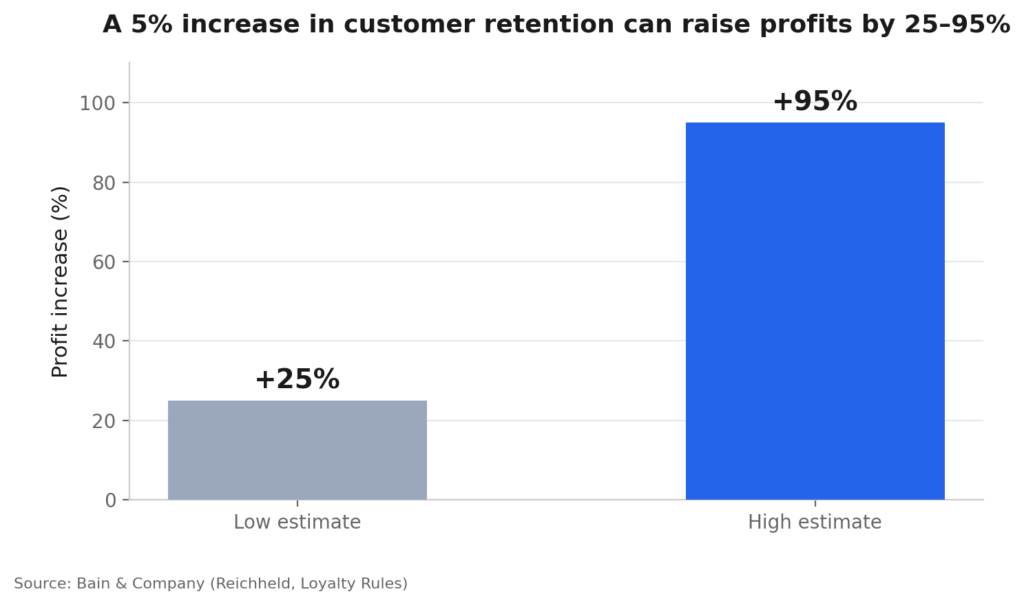
Online casino player experience is the sum of every interaction a player has with your platform, registration, game discovery, payments, support, and responsible-gambling controls. Operators improve it by removing friction at signup, personalising game discovery, paying out fast, supporting players in real time, and building habit through gamification. The payoff is measurable: a 5% lift in retention can raise profits by 25–95% (Bain & Company), and acquiring a new player costs 5–7× more than keeping an existing one.
-
- Signup: keep registration to 3 fields or fewer — long forms collapse conversion.
-
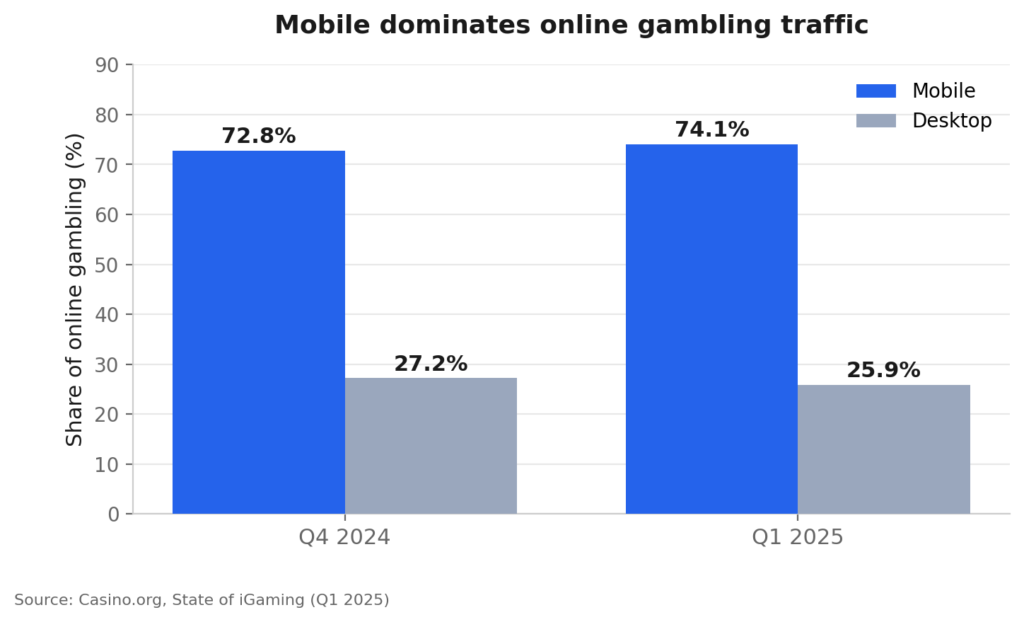
- Mobile: design mobile-first; ~72–74% of online gambling now happens on phones.
-
- Payments: fast payouts outrank brand trust, odds and bonuses as a choice factor (Paysafe).
-
- Habit beats satisfaction: as the strongest predictor of return play (Journal of Business Research).
In a market where almost every licensed casino already offers high-quality games from the same providers, the games themselves are no longer the differentiator. What keeps a player on your platform, and brings them back tomorrow, is the experience around the games. This guide breaks down what player experience actually is, why it now decides profitability, and the specific, measurable levers operators can pull in 2026.
What is player experience in an online casino?
Player experience (PX) is the complete journey a customer takes when interacting with an iGaming platform, from the first ad click through registration, game discovery, deposits, gameplay, support contact, withdrawals and re-engagement. Every menu, banner, load time and payout speed either pulls a player deeper in or pushes them toward a competitor. Because switching costs in iGaming are almost zero, a single bad moment — a slow withdrawal, a confusing lobby, an unanswered support ticket — is often enough to lose a player permanently.
Why it matters now: Research shows only ~6% of active players in a given quarter are new — the overwhelming majority of revenue comes from retained players, not acquisition (Smartico, 2025). PX is the discipline that protects that revenue base.
Why does player experience drive profit more than acquisition?
The economics are now well documented. Over half of iGaming players churn within a year, and more than 80% of that churn is considered preventable. Because winning a new player costs 5–7× more than retaining one, every point of retention you protect compounds. Three mechanisms explain the profit link:
1. Retention compounds into lifetime value
A modest retention gain produces an outsized profit swing, Bain & Company widely cited finding is that a 5% increase in retention can lift profit by 25–95%. For a healthy operator, player lifetime value (LTV) should run 3–5× cost per acquisition (CPA); experience is what stretches that multiple.
2. Habit, not satisfaction, predicts return play
A study in the Journal of Business Research found that habitual behaviour predicts player retention more strongly than satisfaction alone. This is why daily challenges, streaks and loyalty progression matter: they build the routine that keeps a casino as the default destination.
3. Word-of-mouth is the highest-converting channel
With paid-traffic costs rising, top iGaming SEO keywords can exceed $350 per click, recommendations from satisfied players are now the most cost-efficient growth lever. A strong experience is the prerequisite for those recommendations.
How to Improve Player Experience ?
Quick answer: To improve player experience, frictionless registration, mobile-first design, fast payouts, intuitive game discovery, real-time localised support, gamification, and responsible-gambling tools. Together they address the main points where players abandon: signup, deposit, withdrawal, and discovery.
1. Short Registration Flow
Keep the signup form to three fields or fewer. Up to 60% of new players abandon within the first 24 hours, and a long registration path is one of the most common, most fixable causes.
Where the licence permits a shortened flow (e.g. Curaçao), use it and collect remaining KYC data later. Where it does not (e.g. Malta requires full data upfront), soften the step with clear messaging that frames verification as a safety guarantee for the player’s identity and funds.
2. Improve Desktop Site and App Usability
Build for the phone first because roughly 72–74% of online gambling now happens on mobile, approaching the high-70s in some emerging markets. A responsive layout is the minimum; the real competitive edge is omnichannel continuity, letting a player resume on their phone exactly where they left off on desktop. Slow, non-touch-optimised landing pages leak players before they ever deposit..
3. Pay Out Fast and Offer Flexible Payment Options
Prioritise quick, reliable payouts above almost everything else. Paysafe research found that quick, easy payouts are the single most important factor for players choosing a sportsbook , ranking above brand trust, odds, promotions and even preferred payment methods. Localised payment options, low fees and flexible limits compound the effect. No bonus engine will rescue retention if the cashier is slow or unreliable.
4. Make Games Easy to Find
Effortless game discovery is what keeps players coming back. Casinos with intuitive interfaces show roughly 35% higher average retention and 2–4× more repeat visits. With catalogues running into the thousands of titles, discovery is the real challenge: region-specific “top games”, behaviour-based sorting and personalised lobbies, modelled on how streaming services curate — turn an overwhelming catalogue into a tailored shortlist
5. Offer Fast Support Through Chatbots, Live Chat
Offer live chat in the player’s own language at the highest-stress moments. Live chat during deposits, withdrawals and lockouts removes friction exactly where it matters most, while script-heavy or slow support directly undermines any reputation for being helpful.
AI chatbots strengthen this further, handling routine queries instantly around the clock, resolving common issues in seconds, and escalating complex cases to human agents so players never wait during the moments that matter.
6. Use gamification to build habit
Gamified platforms see retention as high as ~75%, versus under half for non-gamified sites (Smartico). Points, levels, missions, leaderboards and loyalty tiers to .
Pair this with AI-driven nudges that re-engage on milestones rather than generic blasts.
7. Treat responsible gambling as a retention tool
Give players configurable limits and proactive alerts. Flexible, customisable limits keep players within a sustainable comfort zone, preventing the catastrophic losses that drive permanent churn.
Move beyond a basic reality check: configurable deposit and loss limits, plus proactive notifications, for example, alerting a player when they’ve reached 80% of a self-set limit, give bettors control and build long-term trust. A player who sets a sensible limit and stays three years is worth far more than a high roller who busts out and never returns.
Measure it: Track Day 1 / 7 / 30 / 90 retention against rough industry benchmarks (≈45% / 25% / 12% / 8%), plus churn rate and LTV:CPA. Players who complete three sessions within their first 72 hours show markedly higher 30-day retention — making early-journey experience the highest-leverage place to invest.
The levers below are ordered by impact-to-effort. Each includes the underlying data and a practical implementation note.
| Lever | Why it works | Benchmark / data point |
|---|---|---|
| 1. Frictionless registration | Long forms kill conversion at the most fragile moment | Up to 60% of new players are lost in the first 24 hours |
| 2. Mobile-first & omnichannel | Most play is now on phones; sessions must carry across devices | ~72–74% of online gambling is mobile |
| 3. Fast, flexible payments | Payout speed is the top sportsbook-choice factor | Ranks above brand, odds and bonuses (Paysafe) |
| 4. Intuitive UI & game discovery | Players abandon if they can’t find a favourite fast | Intuitive UI → ~35% higher retention (Slotegrator, 2025) |
| 5. Real-time support | Locked-out or deposit issues need instant resolution | 42% of users expect a reply within 60 seconds (Zendesk) |
| 6. Gamification & loyalty loops | Turns sessions into a progression players don’t want to abandon | Gamified platforms see ~75% retention (Smartico) |
| 7. Responsible-gambling tools | Prevents catastrophic losses that cause permanent churn | A retained limit-setter outvalues a one-off high roller |